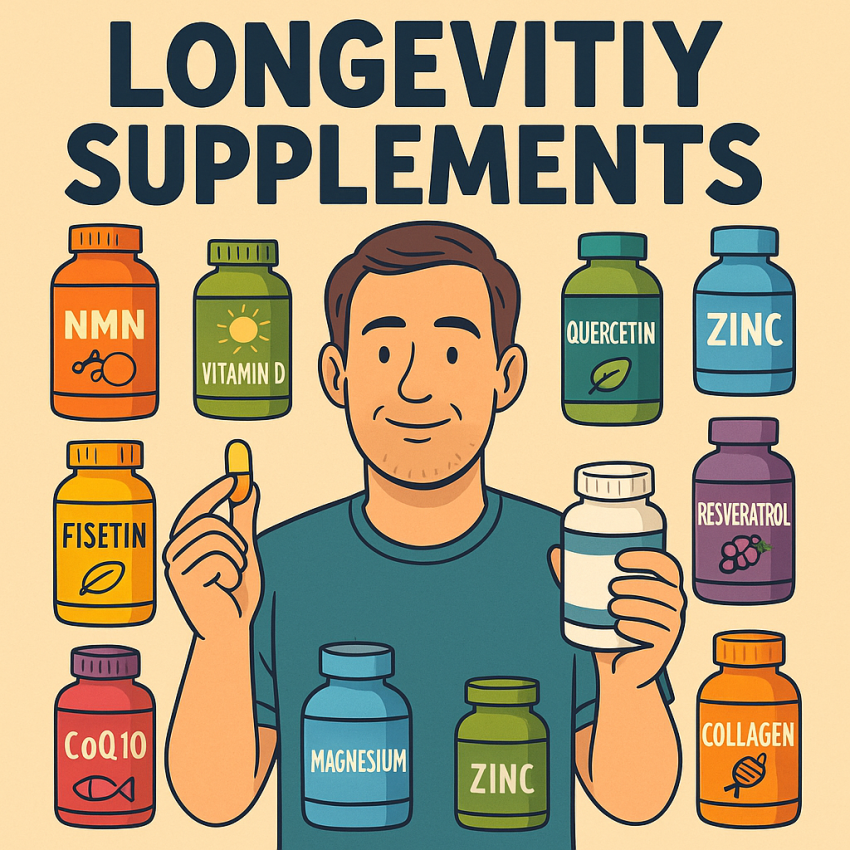
NMN (nicotinamide mononucleotide) has quickly become one of the most talked-about molecules in the longevity world. It’s a direct precursor to NAD+, a coenzyme essential for metabolism, DNA repair, circadian regulation, and stress responses. As NAD+ levels decline with age, NMN is being explored as a way to restore them ([1], [2]).
What the Science Says
Animal research first ignited excitement: in older mice, NMN restored muscle blood flow, improved mitochondrial efficiency, increased capillary density, and doubled running distance ([3], [4]).
Human trials are more modest but promising. NMN appears safe up to at least 1 000 mg/day ([5]), increases NAD+ in blood, and shows functional benefits:
Metabolism: In prediabetic women, 250 mg/day improved muscular insulin sensitivity ([6]).
Endurance: A 60-day trial in healthy adults found dose-dependent gains in walking capacity and self-reported health (300–900 mg/day) ([7]).
Athletic performance: Amateur runners taking 600–1 200 mg/day for six weeks saw significant aerobic capacity gains, suggesting a VO₂ max boost ([8]).
Absorption: Liposomal NMN may raise NAD+ more efficiently than standard powder ([9]).
Beyond trials, The Daily Beast reported anecdotal benefits — faster recovery, clearer thinking, younger-looking skin — after 90 days at 900 mg/day ([10]).
NMN vs NR
NMN and NR (nicotinamide riboside) both boost NAD+, but NR must first convert to NMN inside the body ([11]). NMN enters directly via Slc12a8 transporters ([12]).
NMN strengths: Cardiovascular and muscle endurance benefits, potential VO₂ max improvements ([3], [8], [13])
NR strengths: Stronger evidence for mitochondrial optimization in liver and brown fat ([13])
Athlete takeaway: NMN seems more relevant for endurance and oxygen delivery; NR may suit those focused on metabolic health ([14], [15])
NMN for VO₂ Max and HRV
VO₂ max — the maximum oxygen your body can use during exercise — is a key predictor of healthspan ([19]). By boosting NAD+, NMN may enhance mitochondrial energy output and oxygen utilization. This aligns with performance gains seen in the 2021 runner trial ([8]).
HRV (heart rate variability) data is lacking from clinical NMN studies, but experts suggest NAD+ elevation could improve HRV indirectly by reducing cardiac oxidative stress and enhancing endothelial health ([20]).
Why Some Experts Are Cautious
Human studies remain small and short; no proof yet that NMN extends human lifespan ([6], [16])
Theoretical concerns exist about NMN activating SARM1, a nerve-degenerating protein ([17])
Regulatory uncertainty: NMN was briefly removed from the U.S. supplement market in 2022 before enforcement was paused ([18])
Supplement quality varies widely; not all products contain claimed doses ([16])
Quick Pros & Cons
Potential Benefits
• Consistently raises NAD+ in humans
• Improves insulin sensitivity, aerobic endurance, and walking capacity
• May increase VO₂ max and potentially HRV
• Safe in short-term trials
• Strong anti-aging effects in animal studies
Limitations
• Long-term effects unknown
• Limited sample sizes and durations in human trials
• Potential neurodegeneration risk theoretical but untested
• Regulatory and quality-control issues in supplement market
The Bottom Line
NMN delivers on raising NAD+ and appears to have tangible performance and metabolic benefits. It could be particularly valuable for athletes aiming to enhance VO₂ max, recovery, and endurance, or for health enthusiasts targeting cellular vitality.
For early adopters, 600–900 mg/day under medical guidance is a reasonable starting point, especially when paired with exercise and healthy lifestyle habits. For the cautious, waiting for larger and longer human studies makes sense. Either way, NMN is shaping the future of the longevity and performance conversation — and it’s not going away anytime soon.